
The Overlooked Corneal Stability Check Before Elective Eye Surgery
This article explains the little understood physiological principle behind standard pre-surgery contact lens pause rules, which most patients never get a clear full explanation of during their initial consultation.
Thousands of patients sign up for common elective ophthalmic procedures such as laser refractive surgery or lens replacement surgery every year, and almost all of them receive the same requirement at their first pre-surgery consultation: stop wearing contact lenses for a set period of time before coming in for formal pre-surgery measurements. Many of these patients see this rule as a minor, arbitrary inconvenience, so they choose to sneak in a few more hours of soft contact lens wear the day before their check, or even lie to their care team about how long they have stopped wearing their lenses, assuming no one will notice the tiny, temporary change to their eye surface. Very few of them realize that this simple waiting rule is not a random administrative requirement, but a carefully calibrated clinical standard that directly determines the final safety and effect of their entire surgery.
The human cornea is not a rigid, fixed structure that holds its exact shape permanently, even for people with perfectly healthy eyes. The outermost layer of the cornea is made of flexible, fast-regenerating epithelial cells, and the stroma under that layer is made of stacked collagen fibers that have very mild natural elasticity. Even the softest, most oxygen-permeable daily disposable contact lens will apply a tiny, constant amount of pressure on the corneal surface when worn for 8 or more hours a day, and over weeks, months or years of regular use, this gentle pressure will slowly reshape the surface curve of the cornea in extremely subtle ways that patients cannot feel with their own eyes. This reshaping does not disappear the second a person takes their contact lens out, either: for long-term contact lens wearers, the cornea may take several days, or even more than two weeks, to slowly rebound back to its completely natural, unpressurized baseline shape.
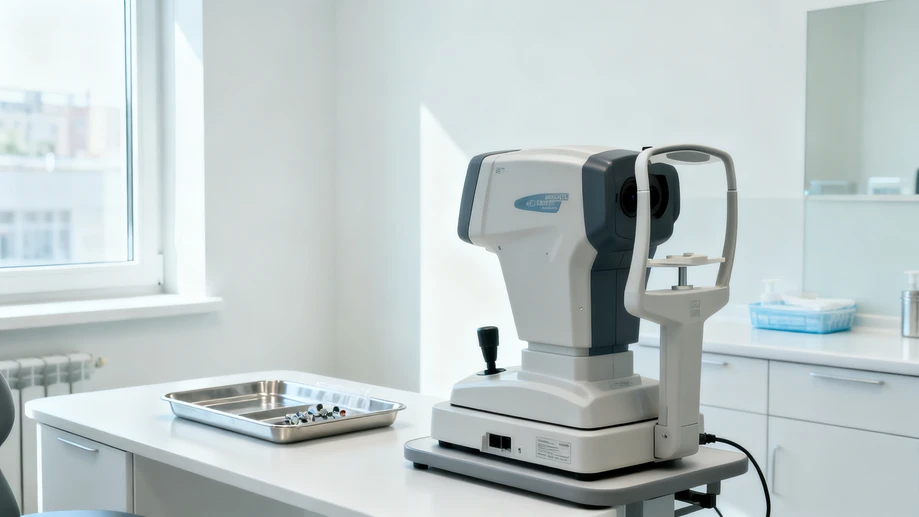
Modern pre-surgery ophthalmic measurement devices are built to detect changes as small as one micrometer on the corneal surface, which means even the tiniest leftover shape distortion from recent contact lens wear can generate a set of skewed, inaccurate data. A difference of only three micrometers in corneal curvature can lead to a calculation error of 50 to 100 degrees in the final surgical correction plan, which is enough to make a patient who was supposed to get 20/20 vision after surgery end up with noticeable blurriness, light halos around night lights, or the need for a second corrective touch-up procedure. Most experienced ophthalmologists can spot the faint, temporary contact lens compression marks on a corneal topography scan instantly, but patients who lie about their wear history can easily lead their care team to misinterpret these marks as natural, permanent corneal features, rather than temporary distortion that will fade on its own.
Many patients have asked in recent years whether the new generation of high-precision 3D corneal scanners can eliminate the need for this waiting period, and the answer is a definitive no. No matter how advanced a measurement device is, it can only scan and record the shape of the cornea that is present on the day of the test, and there is no non-invasive method that can calculate the exact natural baseline shape of a cornea that was compressed for years by contact lens wear. That is why most clinical guidelines require patients to take two separate corneal topography scans 24 hours apart after they stop wearing contact lenses, and only confirm a patient is eligible for surgery when the curvature difference between the two scans is smaller than 0.05 diopters, to make 100% sure the cornea has fully returned to its stable natural state.
This small, rarely discussed clinical rule has saved millions of patients from avoidable unsatisfactory surgical results over decades of ophthalmology practice, and most patients who follow the requirement strictly never even realize how much difference it made to their final experience. The next time a care team asks a patient to set aside their contact lenses for an extra few days before their pre-surgery check, that short waiting period should be seen not as a delay, but as a quiet, important safeguard that ensures every subsequent step of the surgery process can be as accurate and effective as possible.