
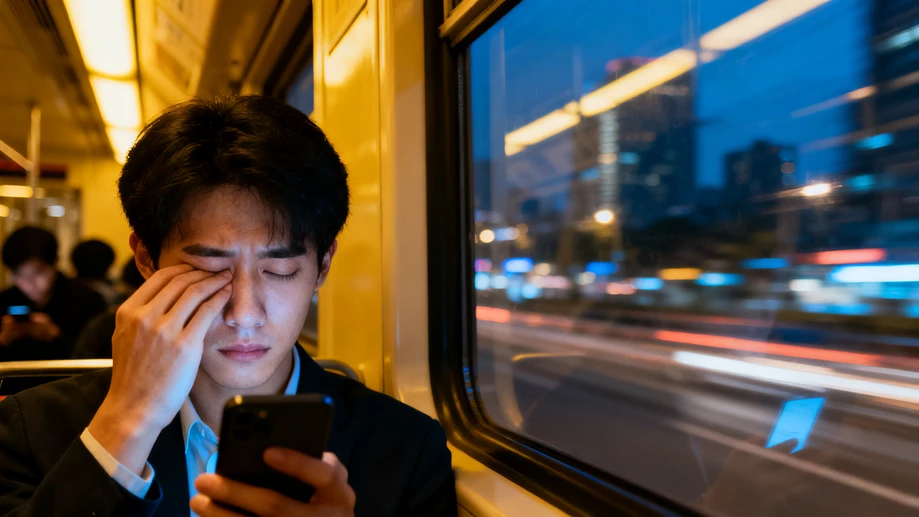
Your Eyes Are Screaming for Help!
Blurry visions and our screen-obsessed lives – is myopia stealing our sight?
Ever found yourself squinting at a menu board that seemed perfectly clear to your friend, or holding your phone uncomfortably close just to read the latest text? You're not alone. Millions worldwide experience this daily reality thanks to myopia, commonly known as near-sightedness. It's not just a minor inconvenience; it's a rapidly growing global phenomenon, reshaping how an entire generation sees the world – or rather, struggles to see it clearly at a distance.
Myopia happens when the eyeball grows slightly too long from front to back, or the cornea (the eye's clear front surface) is too curved. Imagine your eye as a camera. Light rays entering a normally shaped eye land precisely on the retina at the back, giving a sharp image. In a myopic eye, these light rays converge too soon, focusing in front of the retina instead of directly on it. The result? Distant objects appear blurry, while close-up ones remain clear. This biological quirk isn't about your eyes being "weak"; it's about them being shaped differently. Genetics play a role – if both parents are near-sighted, your chances increase significantly. But genes aren't the whole story. Our modern lifestyles seem to be actively encouraging our eyeballs to elongate more than nature might have originally intended.
Here's where things get concerning for our digital age. Extensive research points to a significant environmental trigger: too much close-up work and too little time outdoors, especially during childhood. The hours spent glued to books, tablets, phones, and computers demand intense focus on nearby objects. This sustained near-work strain might be a key driver in eyeball elongation. Conversely, bright natural daylight appears to be a powerful protective factor. Sunlight stimulates the release of dopamine in the retina, a chemical messenger that seems to help regulate healthy eye growth. Think of it as nature's eye growth regulator. Kids who spend more time outside playing, exploring, and soaking up daylight are statistically less likely to develop high myopia, even if they have a genetic predisposition. The stark reality? We're trading sunlight for screen light, and our eyesight is paying the price.
The implications go far beyond needing stronger glasses every year. High myopia (generally considered -6.00 diopters or worse) isn't just a bigger prescription; it significantly increases the risk of serious eye diseases later in life. Think retinal detachment, where the light-sensitive layer at the back of the eye pulls away; glaucoma, increased pressure damaging the optic nerve; myopic macular degeneration, affecting central vision; and cataracts occurring earlier. These are sight-threatening conditions, turning what started as blurry distance vision into a potential pathway to significant vision loss. The alarming rise in childhood myopia means more people are entering adulthood with these higher risks baked in.
So, what can we do? While glasses and contact lenses correct the blurry vision, they don't slow down the eyeball's growth. The good news is that proactive strategies are emerging. For children showing signs of rapidly progressing myopia, specialized treatments like low-dose atropine eye drops, multifocal contact lenses, or specially designed spectacle lenses (like those with peripheral defocus technology) can help slow the elongation. Orthokeratology (Ortho-K) involves wearing rigid gas-permeable contact lenses overnight to temporarily reshape the cornea, providing clear daytime vision without glasses and potentially slowing progression. Crucially, the simplest, most accessible defense remains encouraging more time outdoors – aiming for at least 2 hours daily. For everyone glued to screens, the 20-20-20 rule is golden: every 20 minutes, look at something 20 feet away for at least 20 seconds. It gives those focusing muscles a much-needed break.
Myopia isn't just about blurry signs or needing glasses. It's a complex interaction of genetics and modern environment, with potentially serious long-term consequences. Recognizing it as a significant public health issue, not just an optical inconvenience, is the first step. By prioritizing outdoor time for kids, managing screen use, and exploring progression management options when needed, we can fight back against the rising tide of blurry vision. Protecting our sight requires looking beyond the screen and towards a brighter, clearer future.