5 Eye Myths You're Still Believing (That Are Damaging Your Vision!)
Debunking common misconceptions that secretly sabotage your eye health.
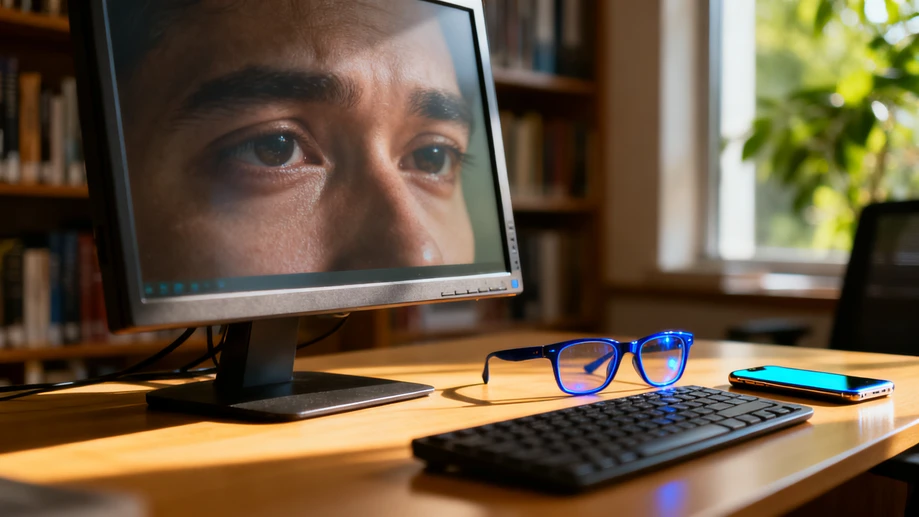
Imagine this: you’ve just splurged on the latest ‘blue light blocking’ glasses after reading endless online horror stories about screens frying your retinas. You settle in for a cozy evening doom-scrolling in the dark, confident you’re the poster child for eye wellness. Newsflash: you might be falling for some of the biggest eye health fibs out there! Let’s shine a light on the persistent myths muddying the waters of good vision habits and separate fact from fiction before you accidentally become your eyes’ worst enemy.
Myth #1: Screens Emit Dangerous ‘Blue Light’ That Will Fry Your Eyes. Truth: The blue light hype is blindingly overblown. While digital devices *do* emit blue light, the amount is significantly less than what you get from natural sunlight. The American Academy of Ophthalmology states there is *no* scientific evidence that the blue light from screens causes retinal damage in humans. The real villain behind screen fatigue? Digital Eye Strain. Hours of staring close-up causes our blink rate to plummet (from a normal 15-20 times per minute to a measly 5-7!), leading to dry, gritty, burning eyes and headaches. The solution isn’t necessarily expensive glasses, but smarter screen habits: the 20-20-20 rule (every 20 minutes, look at something 20 feet away for 20 seconds), adjusting screen brightness to match your surroundings, and ensuring proper ergonomics.
Myth #2: Reading in Dim Light Ruins Your Eyesight. Truth: Your grandma might have scolded you for reading under the covers with a flashlight, but relax. Reading in low light makes your eyes *work harder*, causing temporary fatigue, dryness, and possibly a headache. It’s uncomfortable, certainly, but it doesn’t cause permanent structural damage or change your prescription. Think of it like lifting a heavy suitcase; your muscles might ache temporarily, but they won’t break. That said, consistently straining in poor light is unpleasant, so why torture yourself? Good, comfortable lighting makes reading more enjoyable and reduces eye fatigue – a win-win.
Myth #3: Eye Exercises Can Reverse Refractive Errors. Truth: Can you imagine doing eye calisthenics to ditch your glasses for good? Sadly, it’s a fantasy peddled by dubious online programs. Refractive errors like nearsightedness (myopia), farsightedness (hyperopia), and astigmatism are caused by the physical shape of your eyeball or cornea. No amount of rolling your eyes, zooming focus in and out, or tracing imaginary figures in the air can reshape your eye or eliminate the need for corrective lenses. While eye exercises *might* help with specific issues like convergence insufficiency (trouble focusing eyes together on near objects), prescribed by a professional, they are powerless against the common refractive errors that send us to the optometrist.
Myth #4: Eating Carrots Gives You Superhuman Night Vision. Truth: Carrots aren’t magic bullets. They *do* contain beta-carotene, which your body converts to Vitamin A – a nutrient *essential* for good vision, especially in low light. A severe Vitamin A deficiency can indeed cause night blindness. However, for most people eating a reasonably balanced diet, loading up on extra carrots won’t suddenly grant you owl-like nocturnal prowess. If you’re already getting enough Vitamin A (found also in sweet potatoes, spinach, dairy, and liver), extra carrots won’t enhance your vision further. Focus on a diet rich in various fruits and vegetables (especially leafy greens) for a broader range of vision-protecting antioxidants like lutein and zeaxanthin, which help protect against age-related macular degeneration. Your eyes need a team, not a single orange root vegetable superstar.
Myth #5: If You Can See Clearly, Your Eyes Are Perfectly Healthy. Truth: This is perhaps the most dangerous myth of all. Many serious eye diseases, like glaucoma, diabetic retinopathy, and even some forms of macular degeneration, creep in silently in their early stages. They can steal your peripheral vision or damage your retina without any noticeable blurring of your central vision. By the time you notice a problem, irreversible damage may have already occurred. Regular comprehensive dilated eye exams are non-negotiable, even if you have ‘20/20’ vision. An eye doctor can spot early warning signs and underlying health issues (like diabetes or high blood pressure) that manifest in the eyes long before you experience symptoms. Don’t let clear vision lull you into a false sense of security – schedule that checkup!
Ditching these pervasive eye myths is crucial for adopting truly effective habits. Forget the gimmicks and the hype. Protect your precious sight with evidence-based actions: embrace the 20-20-20 rule religiously, ensure proper lighting for tasks, maintain a nutrient-rich diet (carrots included, but not exclusively!), wear UV-blocking sunglasses outdoors religiously, and most importantly, commit to regular comprehensive eye exams. Your future self, enjoying crisp, clear vision, will thank you for seeing through the nonsense and focusing on what truly matters. Remember, your eyes don't lie – but some popular advice certainly does!