
Could Your Eyeballs Be Turning Into Footballs?
The Quirky Truth About Nearsightedness That'll Make You Blink Twice
Imagine a world where street signs blur into abstract art, friends wave from fuzzy blobs across the park, and movie screens resemble pixelated mosaics. Welcome to the reality of myopia, or nearsightedness, where your eyeball decides to stretch itself like warm taffy. This isn't science fiction; it's a biological quirk affecting billions globally. Your eye, designed as a near-perfect sphere, subtly morphs – elongating just enough to throw distant light rays out of focus onto the retina. The result? Crisp vision up close, but the world beyond arm's length becomes an impressionist painting. It’s like your eye is perpetually stuck in portrait mode, refusing the landscape view.
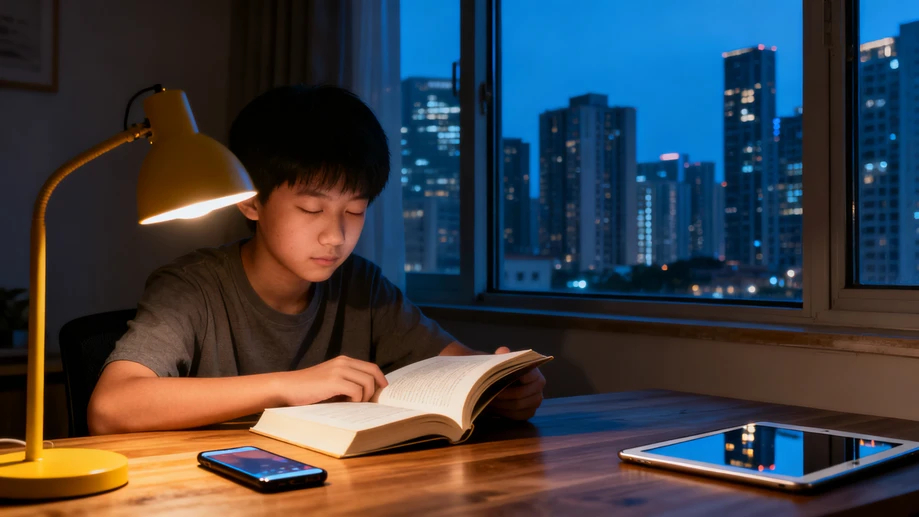
Why does this eyeball elongation happen? Think of it as a growth spurt gone slightly wrong. During childhood and adolescence, as the rest of the body grows, the eye is supposed to follow a precise blueprint to maintain its spherical shape. However, prolonged periods focusing intensely on close objects – books, screens, intricate crafts – send persistent signals to the developing eye: "Hey, we need sharp vision right here, right now!" The eye, eager to please, adapts by growing longer front-to-back. This makes focusing on near objects effortless, but renders distant objects blurry. It's a classic case of short-term adaptation leading to long-term inconvenience, like permanently adjusting your car seat for city driving only to find highway trips uncomfortable.
Modern lifestyles are practically tailor-made for myopia. Our ancestors scanned horizons for predators or prey; we stare at glowing rectangles mere inches away. Hours spent indoors under artificial light, buried in textbooks or scrolling feeds, deprive our eyes of crucial natural daylight and the visual variety of constantly shifting focus between near and far. Studies reveal a startling link: children spending less time outdoors have significantly higher myopia rates. It seems sunlight itself acts like a protective tonic, releasing dopamine in the retina which helps regulate healthy eye growth. So, trading sunshine for screen time might be giving our eyeballs permission to morph.
Fighting back against the blur doesn't require magic glasses. Simple, consistent strategies can make a difference. The "20-20-20 rule" is your eyeball's best friend: every 20 minutes, look at something 20 feet away for 20 seconds. This breaks the intense near-focus cycle. Prioritize outdoor play – aim for at least 90-120 minutes of daylight exposure daily. When reading or using screens, ensure ample ambient light to reduce eye strain, and hold devices slightly farther away (ideally 18-24 inches). Regular comprehensive eye exams, starting in early childhood, are non-negotiable; they catch myopia early, allowing for interventions like specialized contact lenses or low-dose atropine eye drops that can slow its progression significantly.
Understanding myopia isn't just about clearer vision tomorrow; it's about preventing serious eye health issues decades down the line. Highly elongated eyeballs are structurally weaker, increasing the risk of retinal detachment, glaucoma, and macular degeneration later in life. Early detection and management are paramount. So, give your eyes a break, embrace the outdoors, and get them checked regularly. Your future self – gazing clearly at distant mountains or grandchildren playing far across the yard – will be incredibly grateful you didn't let those precious eyeballs turn into footballs.