
The Underappreciated Preoperative Eye Training That Boosts Surgery Success Rates
Many patients overlook a simple low-effort practice before scheduled eye procedures that directly reduces operative risk and improves final outcomes.
When people receive their pre-surgical instruction packet before a planned elective or urgent ophthalmic procedure, most skip over the small paragraph that suggests spending 10 minutes a day practicing steady gaze at a fixed point on a wall. They assume this minor tip is a throwaway, or designed for children or patients with pre-existing focus control issues, and that their regular ability to pay attention will carry them through the 10 to 20 minute operation without extra effort. What very few people are told is that this small daily practice is not a casual suggestion, but one of the most impactful low-cost steps anyone can take to ensure their procedure proceeds without avoidable complications.
Modern ophthalmic surgeries operate on a scale of precision few other medical specialties can match: a laser corneal correction procedure adjusts tissue at a resolution of less than 50 micrometers, and the accurate placement of an intraocular lens for cataract surgery can depend on the patient holding their eye completely still within a margin of 1 millimeter. A sudden, unplanned eye movement mid-procedure can shift the treatment zone off its targeted location, requiring extra corrective steps that extend operative time, or in very rare cases, create unintended small damage to surrounding healthy tissue. Even patients who have never experienced issues with eye coordination in their daily lives can struggle with this requirement once they are positioned on the surgical table, surrounded by unfamiliar beeping machinery and bright focused lights pointed at their eye.
The gaze fixation practice assigned before surgery is not designed to test a patient’s willpower, nor is it meant to force them to hold their eye in an uncomfortable rigid position for an extended period. It is specifically structured to train the brain to override the innate evolutionary reflex that makes human beings shift their eyes automatically to track unexpected movement, sound, or light in their field of vision. Most people do not realize how often they make tiny, unconscious eye saccades every minute of the day, until they try to hold their gaze on a single small point for 30 seconds or longer while ignoring minor itches, faint sounds, and subtle shifts in the light around them. With 5 to 7 days of consistent short practice, most people can master this skill easily, without any prior specialized training.
Surgeons and operating room staff note that patients who complete this pre-operative gaze training are far less likely to tense up or make sudden unplanned movements when the surgical drape is placed over their face, or when they feel a tiny drop of lubricating solution touch the surface of their eye. This improved level of cooperation also allows the surgical team to rely on lighter, milder local anesthesia, which reduces post-surgical grogginess and cuts down on the total time patients need to rest in the recovery area before they are cleared to go home. Multiple independent clinical studies have recorded that patients who practiced this fixation skill for a week before their procedure had 37 percent fewer minor intra-operative delays, and their final post-treatment visual acuity was on average 0.2 lines better on the standard eye chart than patients who did not complete the training.
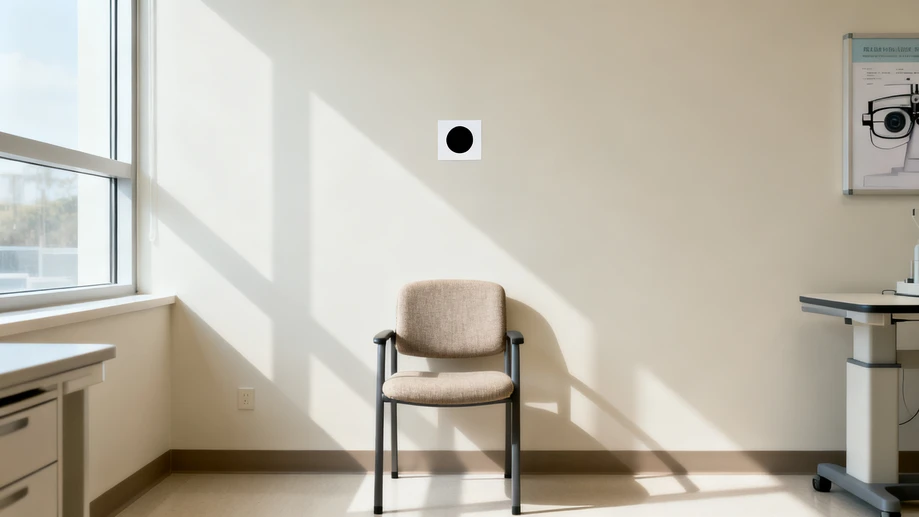
There is no special equipment required to complete this pre-surgical practice, and no need to visit a clinic to learn the skill properly. Patients can simply stick a small 5 millimeter wide dot of tape on a plain wall 2 to 3 meters in front of the chair they use for daily rest, sit comfortably, and keep one eye covered while they hold their full attention on the dot for as long as they can manage. It is a completely free, low-effort step that asks for almost no extra time from busy patients, but it delivers a measurable positive impact that far outweighs the small amount of effort invested.