
The Little-Known Pre-Operative Eye Check That Prevents Unforeseen Post-Procedure Discomfort
This article explores the hidden value of routine tear film stability testing that most patients barely notice before their scheduled eye surgery.
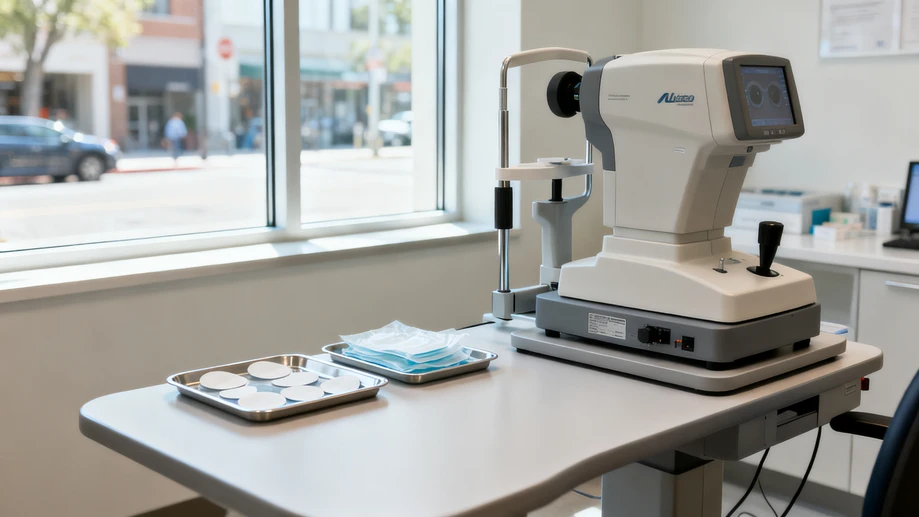
Millions of people around the world schedule elective eye surgeries every year, ranging from vision correction procedures to age-related cataract removal, and most of them walk into the pre-op clinic with a clear set of expectations. They assume the staff will run standard scans of their cornea, measure their internal eye pressure, confirm their vision prescription, and give them a set of final instructions to follow before the procedure starts. Very few people expect to be asked to sit through a 3 to 5 minute test that blows a tiny, harmless puff of warm air toward their open eye, tracks how long it takes for the thin tear layer on the eye surface to break apart, and asks them to blink normally a handful of times without holding their eye open on purpose. A large number of patients even ask to skip this step, saying they do not have dry eye symptoms, they do not wear contact lenses often, and they have no history of eye irritation that could possibly affect the surgery results.
What almost none of these patients realize is that subclinical dry eye, a condition where the tear film is far less stable than the patient’s own perception suggests, affects more than 60 percent of adults who spend more than 6 hours a day looking at digital screens, according to global ophthalmology population studies. Many people have adapted to their slightly unstable tear layer over years of heavy screen use, so they do not register the faint scratchiness or blurriness that comes and goes when they blink less often as an actual medical symptom. If a surgeon proceeds with an eye procedure without spotting this subtle instability, the uneven, partially dried spots on the corneal surface will alter the precision of laser alignment, lead to tiny unplanned irregularities on the treated corneal layer, and cause the patient to end up with slightly less sharp unaided vision than the pre-op scans predicted, even if every step of the surgery was performed perfectly according to plan. Patients with unaddressed unstable tear film also run a far higher risk of extended post-op recovery discomfort, including persistent foreign body sensation, light sensitivity that lasts for weeks instead of days, and fluctuating vision that takes months to stabilize even after the surgical site is fully healed.
This is the exact reason that leading ophthalmology surgical teams have made this tear film test a mandatory, non-skippable step in every pre-op checklist, even for patients who swear they have perfectly healthy eyes. Many patients make the common mistake of using over-the-counter eye drops the night before or the morning of their pre-op appointment, thinking that keeping their eyes extra moist will make the test go faster, but this action often skews the results in the wrong direction. Preservative-containing eye drops can temporarily coat the eye surface with a thin slippery layer that hides the natural tear instability, leading the test to return a false normal reading that hides the actual issue, while overusing unpreserved artificial tears can dilute the natural tear layer to create a false positive that marks a patient as having severe dry eye unnecessarily. Clinics almost always advise patients to stop wearing soft contact lenses for at least three full days, and rigid gas permeable lenses for at least three weeks, before their pre-op assessment, to make sure the tear layer has fully returned to its natural unaltered state after being pressed against by the lens material for long hours.
This small, seemingly trivial test is never meant to slow down a patient’s surgery schedule or create extra unnecessary work for the clinical team. It is one of the dozens of small, carefully designed safety checks that the field of ophthalmology has built into its pre-op workflow over decades of clinical practice, to eliminate the tiny, easy-to-miss variables that no other standard eye scan can catch. Many patients who leave their surgery clinic with near-perfect vision and zero post-op discomfort later tell their care teams that they barely remember doing the tear film test, and they had no idea that the few minutes they spent blinking at a gentle machine played such a huge role in making their entire procedure as smooth and successful as possible. It is these small, behind-the-scenes pre-op steps that separate a good surgical outcome from a great one, and turn a routine medical procedure into a life-changing experience that improves a patient’s daily quality of life for years to come.