
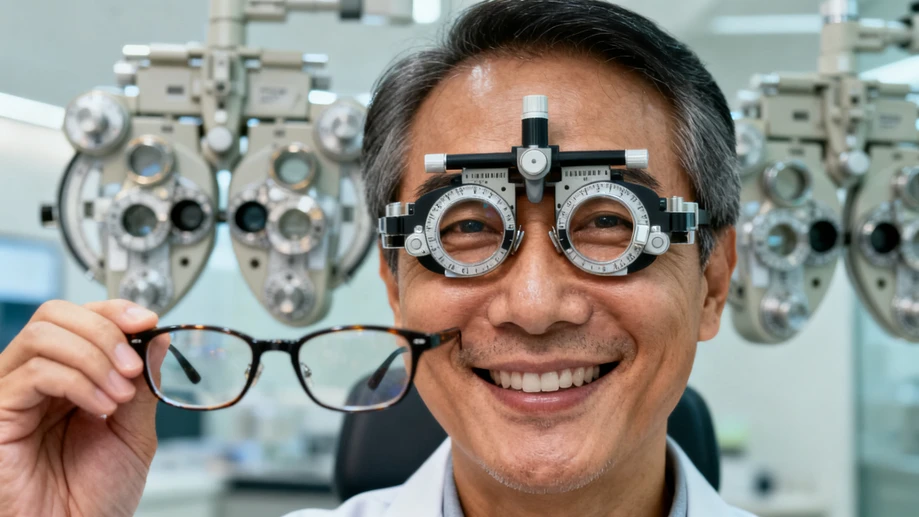
Say Goodbye to Glasses Forever!
Unlock the Wonders of Vision Correction Surgery in Your Daily Life
Imagine waking up to a world where blurry mornings are a thing of the past—no more fumbling for spectacles on the nightstand or dealing with fogged-up lenses in the rain. Myopia, or nearsightedness, affects over 30% of the global population, turning everyday tasks like reading street signs or watching a movie into frustrating challenges. But here's the exciting part: modern eye surgery offers a life-changing solution that feels almost magical. From busy parents juggling work and kids to athletes seeking peak performance, this procedure isn't just for the elite; it's accessible and tailored for real people like you. Dive into the science behind it, and you'll discover how a quick, outpatient visit can transform your vision, making glasses and contacts obsolete in a blink. It's not sci-fi—it's everyday innovation that's reshaping how we see the world, one clear-eyed smile at a time.
What exactly happens during this revolutionary process? The most common types include LASIK (Laser-Assisted In Situ Keratomileusis), PRK (Photorefractive Keratectomy), and SMILE (Small Incision Lenticule Extraction), each designed to reshape the cornea and correct refractive errors. LASIK, for instance, uses a precise laser to create a thin flap on the eye's surface, then gently sculpts the underlying tissue to focus light properly on the retina—all in under 15 minutes per eye. Think of it as a high-tech tune-up for your peepers, with minimal discomfort thanks to numbing drops. PRK, an older but reliable method, removes the outer layer entirely, allowing the cornea to heal naturally, while SMILE involves extracting a tiny lens-shaped piece of tissue through a small incision. These aren't lab experiments; they're FDA-approved techniques performed in clinics worldwide, backed by decades of research. The best part? You're awake during the procedure, chatting with the surgeon as if it were a routine dental visit, and most patients report immediate improvements. It's a blend of art and science that turns complex biology into a seamless experience, proving that better vision doesn't have to be a distant dream.
Now, let's talk about the journey—from pre-op jitters to post-op joy. Before surgery, you'll undergo thorough screenings to ensure you're a good candidate, like having stable vision for at least a year and no underlying eye diseases. The actual operation is surprisingly swift: after arriving at the clinic, you're prepped with anesthetic drops, and within minutes, the laser does its work. Recovery is a breeze for most; expect some dryness or mild irritation for a few days, but you can typically return to work the next day. By week one, many marvel at crisp details they hadn't seen in years—like reading fine print or spotting birds in trees. Long-term benefits are profound: studies show over 95% of LASIK patients achieve 20/20 vision or better, reducing dependence on corrective eyewear and boosting confidence in social settings. Imagine hiking without worrying about lost contacts or swimming with crystal-clear sight—it's freedom redefined. However, it's not all rainbows; risks like dry eyes or glare at night are rare but possible, emphasizing why consulting a qualified ophthalmologist is crucial. This isn't a one-size-fits-all fix, but for millions, it's a game-changer that fits snugly into daily routines.
But what about the cost and accessibility? You might be surprised—vision correction surgery has become more affordable and widespread, with options starting around $2,000 per eye in many regions. Insurance often covers parts if deemed medically necessary, and financing plans make it manageable. Plus, technological advances mean fewer complications and faster healing times than ever before. In real-life stories, take Sarah, a teacher who ditched her glasses after surgery and now enjoys classroom interactions without distractions, or Mark, a cyclist who credits his improved depth perception for safer rides. These aren't isolated tales; they're testaments to how this innovation empowers people to live fuller, more active lives. So, if you're tired of the hassle, why not explore it? Start with a simple consultation—it could be the first step toward a brighter, clearer future.
In wrapping up, remember that eye surgery isn't just about ditching glasses; it's about reclaiming moments that matter. From catching your child's first steps to savoring a sunset, enhanced vision enriches every aspect of life. While it's not for everyone—pregnant women or those with certain health conditions should wait—the majority find it a safe, effective choice. So, take the leap: research local specialists, ask questions, and envision a world where your eyes work for you, not against you. After all, in this fast-paced era, why settle for less when clarity is within reach?