
The Unseen Fluid Regulation System That Makes Modern Cataract Surgery Surprisingly Painless
It is a little-known hidden functional design built into modern ophthalmic surgical equipment that drastically reduces patient discomfort during cataract procedures and shortens post-operative recovery periods.
Most people who have never undergone eye surgery tend to imagine cataract removal as a deeply invasive, painful procedure that requires heavy anesthesia and days of strict rest in a dark room. Many elderly patients even delay booking the procedure for years out of fear of unbearable pulling sensations or sharp pain during the operation, despite the fact that cataracts are the leading cause of reversible vision loss in people over 60 across the world. What almost no patient learns from pre-operation consultation brochures or routine clinical explanations is that one tiny, nearly invisible engineering design is responsible for turning this once daunting procedure into one of the safest, most low-discomfort surgeries in modern medicine, to the point that most patients stay fully awake through the entire 10 to 15 minute process without feeling any notable pain.
Decades ago, before this hidden design was widely adopted, cataract surgery required a much larger incision on the cornea, and surgeons had to manually control the flow of saline solution pumped into the eye to maintain consistent internal pressure while breaking up and removing the clouded natural lens. Without automated real-time adjustment, eye pressure would often spike or drop sharply as the surgeon used suction tools to clear broken lens fragments, leading to noticeable pressure pain in the eye, blurred vision that could last for days after the operation, and a higher risk of post-operative complications such as corneal swelling or temporary high intraocular pressure. Patients would be told to keep their eye covered with a thick pressure bandage for at least 24 hours after the operation, and they were restricted from bending over, lifting heavy objects or watching television for more than a week to avoid dislodging the healing incision.
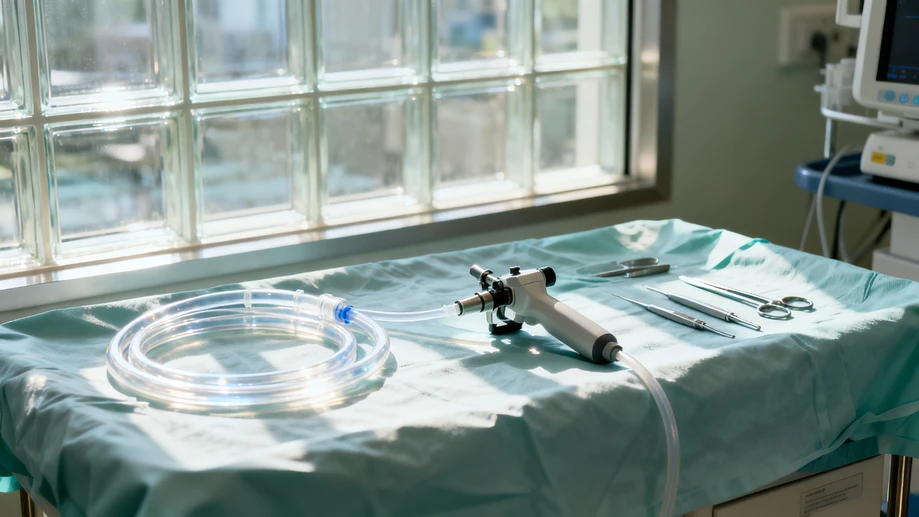
The modern system that changed this entire experience is a closed-loop fluid feedback mechanism built directly into the ultrasonic phacoemulsification devices used for almost all standard cataract surgeries today. Tiny pressure sensors placed along the fluid lines that carry saline into the eye can detect even the smallest fluctuation of intraocular pressure as the procedure progresses, and adjust both the infusion rate of the fresh saline and the negative pressure of the suction tool in less than a fraction of a second, keeping internal eye pressure steady within a 3-millimeter mercury range for the entire length of the surgery. This means that the small incision on the cornea never collapses unexpectedly, no sudden pressure spikes press on the sensitive optic nerve, and the surgeon has a far more stable working field to place the new artificial intraocular lens precisely where it is needed.
This system did not emerge from a highly publicized corporate research project, but from a small, iterative modification made by a group of clinical ophthalmologists in the early 1990s who noticed that their patients reported far less post-operative discomfort when they modified existing infusion pumps to respond to real-time pressure readings instead of running at a fixed pre-set speed. For several years, the modification was only used in small private clinics before major medical device manufacturers integrated the mechanism into their mainstream production lines, and it is now estimated that more than 30 million cataract surgeries around the world rely on this exact hidden design every single year. Even so, most patients never hear about this feature, as it operates entirely behind the drape covering the upper half of their face, with no visible moving parts that could draw attention to itself during the procedure.
The benefits of this nearly invisible system go far beyond just reducing discomfort during the short procedure. The steady intraocular environment it maintains drastically cuts the risk of accidental damage to the delicate corneal endothelium, the thin layer of cells that keeps the cornea clear and free of clouding, which means that more than 90 percent of patients have clear, usable vision within 2 to 3 hours after the procedure ends. No heavy pressure bandage is needed, patients can walk out of the clinic on their own after a short 30 minute observation period, and they can resume most of their daily activities including reading, cooking and even working on a computer the very next day without going through a long, restrictive recovery period. Many patients who undergo the surgery for the first time often express surprise that the entire experience was far milder than a routine dental cleaning, and almost none of them guess that the credit for that comfort is owed to a tiny set of sensors regulating fluid flow where they could never see it.